Morning bowl
A starting point you can change
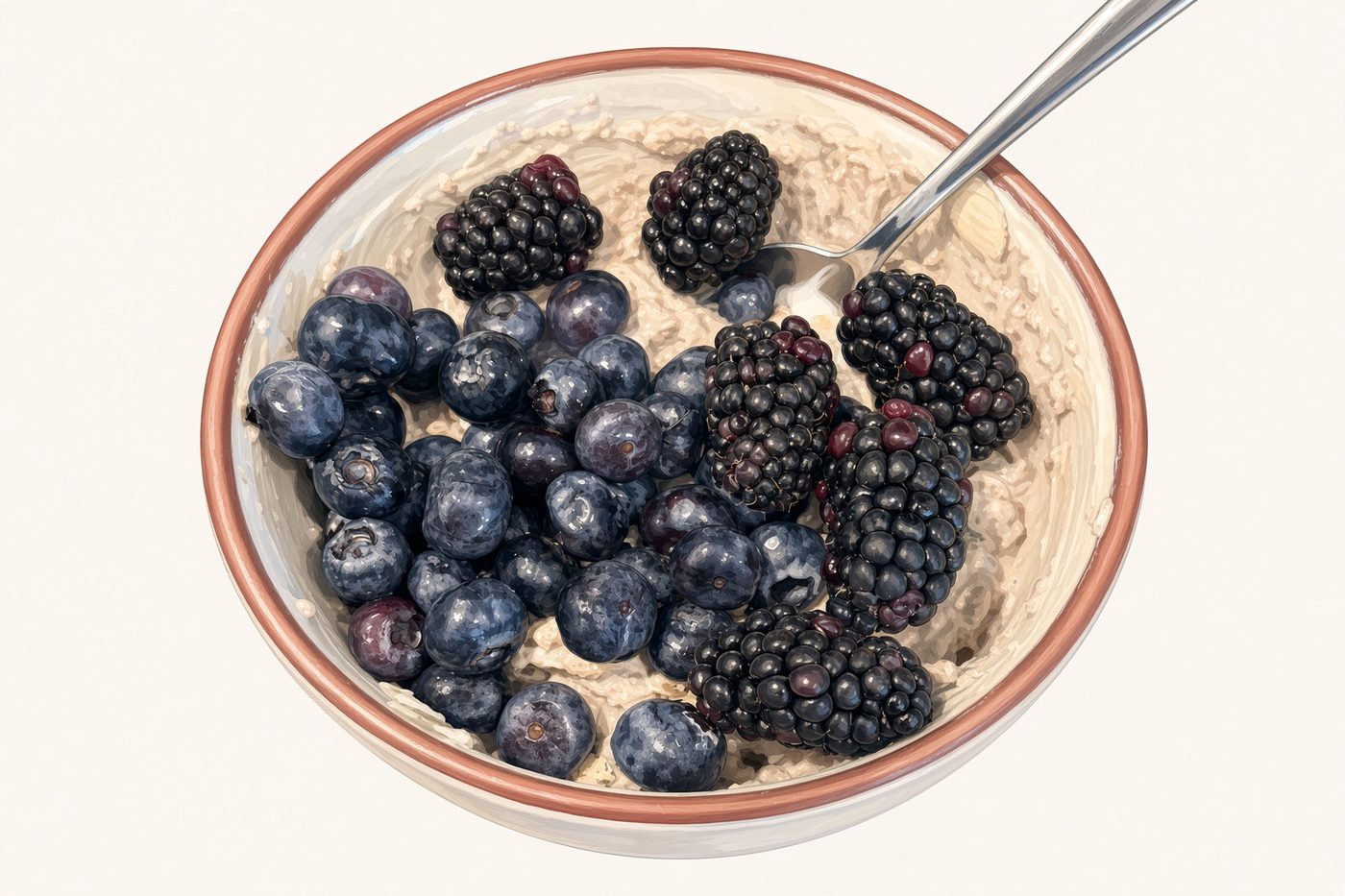
Morning chia pudding
This is a weighed breakfast: chia base mixed ahead in a mason jar, then yogurt and toppings in the bowl. The grams are a starting point, so swap fruit, milk, yogurt, or toppings if you like. Change a gram amount or check one off, and the calories, protein, and fiber follow.
Make the chia base whenever the jar runs low. Start with 120 g per bowl.
Contains milk, wheat, soy, and tree nuts (almond, walnut). Not lactose-free. The protein tub isn’t fully listed here.
-

Step 1
Chia sludge
Spoon some from the jar. The gram amount is only a start.
Make the chia base
A make-ahead base for an 800 ml mason jar. Mix a new jar when this one runs low, and shift the amounts if you like.


Ingredients
Chia sludge ingredients for one jar Raw kefir 550 ml Orgain Organic Protein, Creamy Chocolate Fudge 2–3 scoops (~60 g) Chia seeds 80 g Dried goji berries 25 g Water as needed to thin Method
- Add the chia seeds and dried goji berries to a large bowl, or straight into the 800 ml mason jar.
- Sprinkle in the protein powder and stir so it doesn’t sit in clumps.
- Pour in the raw kefir and mix until the dry spots are gone.
- If it looks stiff, add water a splash at a time until it’s thick but easy to stir. It firms up more as the chia gels.
- Rest it 5–10 minutes, then stir once more if you still see clumps.
- Cover and chill for 2–4 hours, or overnight. A stir before you scoop keeps it even.
This jar uses 80 g of chia, a little more than a classic pudding, for a dense sludge that still spoons easily. The kefir is already thick, so start lighter and loosen it with water if you want. 120 g per bowl is the starting spoon on this page. Keep it covered in the fridge for about 3–4 days. Stir before each scoop, and add a splash of water or kefir if it sets firmly. Water adds no calories, but a splash changes how much kefir, powder, chia, and goji are in each gram you spoon out.
-

Step 2 Next
Plain nonfat Greek yogurt
Kirkland Signature organic
Stir it through for one pudding, or leave soft swirls. Milk or another yogurt is welcome. Creatine can go in if you already use it. It isn’t weighed, and it isn’t part of the bowl.
-

Step 3 Next
Ancient grains granola
Kirkland Signature · Nature’s Path organic
Crunch on top, or fold it through. Another cereal is fine too.
-

Step 4 Next
Walnuts
A few pieces for crunch. Another nut, or none at all, is fine.
-

Step 5 Next
Pumpkin seeds
A scatter with the granola, or swap in another seed.
-

Step 6 Next
Blueberries and blackberries
Fresh fruit to finish. Any berries you have will do. A half-and-half split is only an estimate.
Numbers for this sitting
This bowl
Each field above is one bowl, and the grams are a starting point. This table is the weight for the bowls you’re making now.
| Ingredient | Grams |
|---|
Starting point: sludge 120 g, yogurt 140 g, granola 20 g, walnuts 6 g, pepitas 20 g, and berries 163 g. The yogurt photo is an earlier scoop that reads 156 g.
Estimated, one bowl
Change any gram amount and these follow. They’re estimates for the foods listed, so a swap of fruit, yogurt, or toppings won’t show up here. The soft parts are the unlabeled kefir, the protein scoop range, the berry mix, and any water in the sludge. Granola uses the dry cereal column on the bag.
Ingredients
Open a row for how it’s used and where the note comes from. The bowl above is a starting point.
Chia seeds The base · start 80 g
Soaks up liquid, so the jar can be mixed ahead. A little more or less is fine. It contributes fiber, plant protein, and ALA omega-3. The seeds in this sludge are already soaked. Increase fiber gradually if this amount is new for you.
Raw kefir Milk The base · start 550 ml
The liquid the chia sets in. Milk or another cultured drink can stand in, and the numbers assume this kefir. It brings milk protein and calcium. Cultures depend on the product. Not lactose-free. A small trial found fermented kefir was tolerated better than milk by some people with lactose issues. That does not make it lactose-free. Probiotic effects aren’t guaranteed.
Orgain Organic Protein, Creamy Chocolate Fudge Read the tub The base · start about 60 g, 2–3 scoops
Plant protein and chocolate flavor for the jar. One bowl is only a fraction of that, not a full label serving. Another powder is fine if you check its label. Check the tub you have before trusting a label number or an allergen statement. This page doesn’t claim the powder is free of any allergen.
Dried goji berries The base · start 25 g
A little dried fruit for fiber, color, and chew. Other dried fruit can stand in. Can interact with warfarin, and some people are allergic. Not a treatment.
Water The base · as needed
Just to loosen the mix, if you want it. No calories. A splash changes what each gram of sludge contains, so the estimates move with the weight you enter.
Kirkland organic plain nonfat Greek yogurt Milk Bowl · start 140 g
Protein and calcium for the bowl. Plain keeps this scoop unsweetened. Milk or another yogurt is an easy swap, and the numbers assume this one. Not lactose-free.
Ancient grains granola Wheat Soy Tree nut Bowl · start 20 g
Kirkland Signature Nature’s Path Organic Ancient Grains granola. Another cereal is fine; these numbers are for this bag. The front names Khorasan wheat, spelt, almonds, quinoa, and amaranth. The panel’s contains line names soy and almonds. Wheat and spelt are in the name and the ingredients. The bag notes equipment that also processes cashews, hazelnuts, and pistachios. A 20 g spoon of the dry cereal, from the 55 g column, is about 91 calories, 1.8 g protein, and 2.2 g fiber. The bag name includes a probiotic culture. This page doesn’t claim a probiotic benefit.
Walnuts Tree nut Bowl · start 6 g
A few pieces for crunch, with unsaturated fat and ALA. Another nut is fine. Six grams is not the larger amount used in nut studies.
Raw pepitas Bowl · start 20 g
A handful with the other toppings, easy to trade for another seed. They contribute plant protein, unsaturated fat, and minerals, including magnesium and zinc.
Blueberries Bowl · part of a 163 g start with blackberries
Fruit, fiber, and the anthocyanin pigments that color them. Any fruit can stand in. Half of the berry weight is only an estimate. The berries were weighed together.
Blackberries Bowl · the rest of that 163 g start
The higher-fiber berry in the mix, or whatever fruit you have. The split with blueberries is an estimate, not a second weighing.
Creatine Optional Not weighed · not part of the bowl
A handy moment to take it if you already do. Skip it if you don’t. Not required for this breakfast, and not general morning energy. Research on creatine is about certain high-intensity exercise and training. People with kidney disease should ask a clinician before using it. This page doesn’t list a dose, and it doesn’t cover other supplements.